
What Does the Steel Industry Actually Do? Contributions Seen Everywhere in Daily Life
Steelmaking uses high-temperature "oxidation-reduction" chemical reactions to remove impurities from raw materials and control their composition, refining them into usable steel. It is generally divided into blast furnace steelmaking and electric arc furnace (EAF) steelmaking.
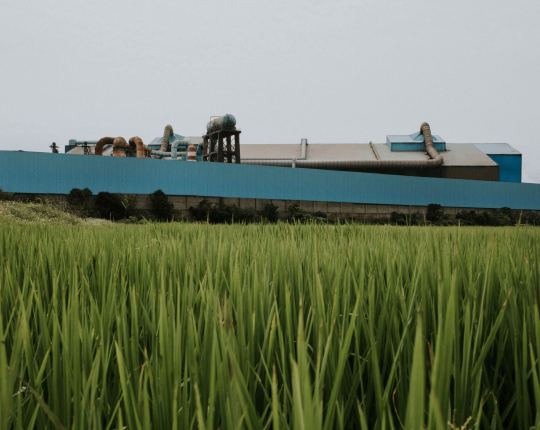
Since its founding, Chien Shun Steel has committed itself to the more environmentally friendly EAF steelmaking process. Seeking a mutually beneficial balance between development and environmental protection has always been the direction Chien Shun pursues with perseverance.
In steelmaking, differences in smelting temperature and method give steel different levels of hardness, toughness and ductility, which allows it to be used widely across many fields. Steel can be found everywhere, from everyday goods and vehicles to public buildings, and most mechanized plants also use steel equipment.
An Introduction to Traditional Blast Furnace Steelmaking
Most of the Earth's iron is stored in the crust in the form of "iron oxide." A blast furnace is the equipment that performs the initial reduction of iron ore into pig iron.
A blast furnace uses coke as fuel, and the carbon monoxide produced during combustion reduces the iron oxide to molten iron. The molten iron then enters a converter, where oxygen is blown in to oxidize the impurities and remove them as slag, refining it into molten steel that then goes through subsequent processes to become finished products.
An Introduction to Eco-Friendly EAF Steelmaking
The full name of the electric furnace is the electric arc furnace. When a potential difference exists between electrodes that are close enough together, the air between them is ionized and discharges, forming an electric arc. An electric arc furnace uses the high temperature generated by the arc between graphite electrodes to melt scrap steel.
After the scrap steel melts, it first undergoes oxidation refining to remove impurities, then deoxidation during the reduction stage, and auxiliary materials such as ferrosilicon and ferromanganese can be added as required to produce molten steel. In Chien Shun Steel's integrated operation, the molten steel is then poured into a continuous caster to form billets, which are rolled into finished products.
EAF vs. Blast Furnace Steelmaking: A Comparison
The raw materials for traditional blast furnace steelmaking must first go through sintering and coking, and given its steelmaking principle, the entire process emits large amounts of carbon dioxide, while mining also damages the environment. In addition, once a blast furnace is lit, it cannot be shut down abruptly without damaging the furnace body, so it must run around the clock and consumes more energy.
EAF steelmaking, on the other hand, requires ample electricity and a sufficient supply of scrap steel. It directly reduces recycled scrap iron and scrap steel without the need to mine coal or iron ore, making it relatively friendly to the environment. Compared with blast furnace steelmaking, a long-process route, EAF steelmaking is a short-process route with greater advantages in energy saving and environmental protection.
Chien Shun SteelAims for "Zero Waste" and Minimal Environmental Impact
To coexist and thrive together with the environment, Chien Shun Steel exercises strict control at the source, keeping raw materials that tend to generate pollution out of the furnace; the EAF steelmaking process is operated meticulously with stable furnace temperatures to keep pollutants from re-forming at low temperatures; and high-quality dust collection and removal equipment is used and replaced as it ages, reducing exhaust emissions to meet the highest environmental standards.
Chien Shun also commissions accredited agencies to conduct regular testing and works with companies registered with the Environmental Protection Administration to make effective reuse of oxidizing slag, keeping waste generation to a minimum in fulfillment of the company's goals.
Fifty years ago, after careful evaluation from every angle, we resolutely committed to EAF steelmaking because of its more environmentally friendly nature. While protecting the environment, Chien Shun is dedicated to providing the highest-quality rebar products and customer service, and will continue to uphold this belief as we keep refining and improving!
(Further reading: Standardized Rebar and Green Steel: Chien Shun Steel Improves Service, Protects Environment)